
Key takeaways
- Start with the chemical list and current SDS files.
- Review every wetted or exposed component—not only the cabinet body.
- Request model-specific construction details before approval.
Start with the chemicals, not the cabinet color
Steel and polypropylene cabinets can look suitable in a catalog while serving different storage conditions. Begin with chemical names, concentrations, container materials, container sizes and the maximum quantity expected in the cabinet.
The current SDS and the facility chemical-compatibility process should guide the review. A product-family name does not establish compatibility for every chemical or concentration.
Where polypropylene enters the comparison
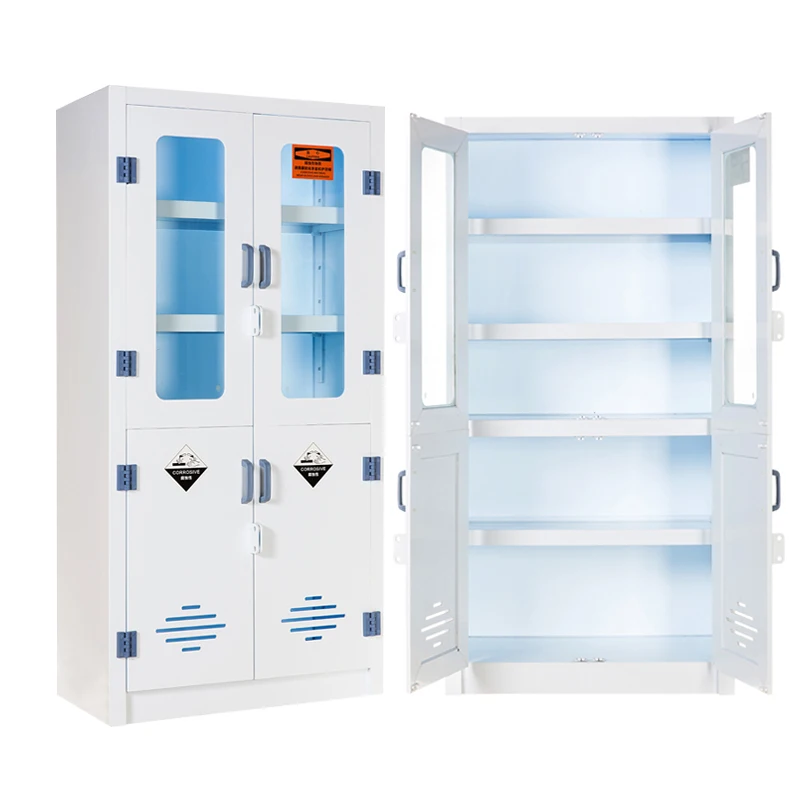
Polypropylene is commonly considered when corrosion resistance is a central concern. Buyers should still review the grade and thickness of the material, welded construction, shelf design, sump or tray details, hinges, fasteners and any components made from a different material.
- Cabinet body and back panel
- Shelves, trays and spill-containment areas
- Hinges, handles, locks and fasteners
- Load limits and usable internal dimensions
- 01Start with the chemical list and current SDS files.
- 02Review every wetted or exposed component—not only the cabinet body.
- 03Request model-specific construction details before approval.
Where steel enters the comparison
Steel cabinets are often evaluated for general laboratory storage, physical durability and integration with an existing cabinet system. The coating, seams, shelves and hardware still need to be reviewed against the stored material and the operating environment.
A painted surface should not be treated as universal chemical resistance. Ask for the exact model construction and any available material information.
Questions for a model-level comparison
| Review item | What to confirm |
|---|---|
| Stored material | Chemical name, concentration, SDS and container |
| Construction | Body, shelves, tray, hinges and fasteners |
| Capacity | Container count, usable dimensions and shelf load |
| Project files | Drawing, specification and required supporting documents |
What to send the supplier
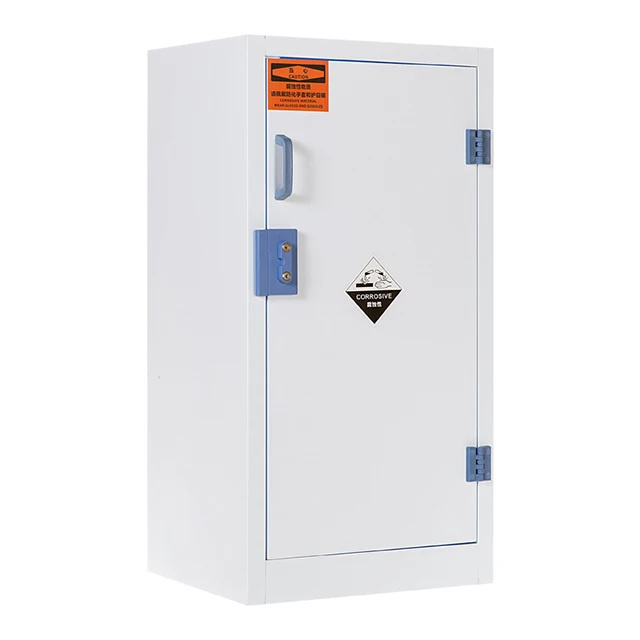
Send the chemical list, container sizes, expected quantity, room constraints, destination market and required files. If a specific model is under review, keep its model reference on every document request.
Map every exposed component
A material comparison fails when it stops at the cabinet shell. A leaking bottle may contact a shelf coating, tray, shelf clip, hinge, fastener, door seam and lock hardware before it reaches the cabinet floor. Record each component that can encounter liquid or vapor, its stated material and whether replacement parts are available.
Use the chemical storage cabinet material guide to structure that review, then send a chemical list for review with concentrations and container sizes rather than a generic request for a ‘corrosion-proof’ cabinet.
| Component | Steel review | Polypropylene review |
|---|---|---|
| Body | Steel grade, coating and seams | Polymer grade, thickness and welds |
| Shelves | Coating, load and edge damage | Material, reinforcement and load |
| Tray/sump | Lining and cleanability | Welds, capacity and removal |
| Hardware | Finish and exposed metal | Metal inserts, hinges and locks |
Use exclusion rules before preference
Exclude a candidate when chemical evidence conflicts with an exposed material, containers do not fit the usable layout, shelf loads are undocumented, or the required project evidence cannot be tied to the model. Only compare price, lead time and preferred construction after those gates are passed.
Next, calculate the physical requirement with how to size a chemical storage cabinet and browse polypropylene acid and alkali cabinets that can be evaluated against the approved material route.
Run the comparison against a real inventory
Consider a laboratory buying one cabinet for hydrochloric acid solutions, nitric acid and several alkaline cleaners. Calling all of them corrosives does not create one compatible group. The buyer must first separate the oxidizing-acid question, check concentrations and container materials, and identify which components could be exposed during a leak. Only then can polypropylene and coated steel be compared without turning a material preference into a safety conclusion.
The quotation should identify the proposed body, shelf, tray and hardware materials. If the supplier can describe only the exterior shell, the comparison remains incomplete. Ask how shelves are supported, whether a removable tray uses the same polymer, whether metal inserts are exposed, and which load values apply to the offered configuration. These details affect cleaning, replacement and service life as much as the headline material.
- Reject generic chemical-resistance claims without a named material and chemical context.
- Reject a layout that cannot hold the approved container set with handling clearance.
- Separate corrosion resistance from fire-performance or compliance claims.
- Record unresolved compatibility questions before commercial comparison.
Compare quotations on the same technical basis
Normalize the quotations before comparing cost. One supplier may quote a polypropylene body with polypropylene shelves and tray; another may quote a coated-steel body with a separate liner; a third may omit shelf material entirely. Put body, back, doors, shelves, tray, hinges, fasteners, lock, load values and usable dimensions into one bid-comparison sheet. Mark every missing value rather than treating silence as equivalence.
Separate the initial purchase from lifecycle questions. Ask how a damaged shelf or tray is replaced, whether the component can be ordered separately, which cleaning agents the supplier permits, and whether field repair changes any supporting documentation. Polypropylene can avoid a coating layer, but fabrication quality, reinforcement and exposed hardware still matter. Coated steel can provide a familiar rigid construction, but scratches, seams and coating compatibility require review. Neither material wins without the chemical and operating context.
Finish with an evidence gate. The chemical list and SDS support the buyer’s compatibility review; the supplier provides model construction and available documents; the facility approves the storage arrangement. A quotation should not collapse those three responsibilities into an unsupported sentence such as suitable for all acids.
References
- NIOSH Pocket Guide to Chemical HazardsCDC / NIOSH
- Incompatible Chemicals Storage GuideU.S. Environmental Protection Agency
- 29 CFR 1910.1200 — Hazard CommunicationU.S. Occupational Safety and Health Administration
Sources support the cited regulatory and safety context. They do not certify a Safatrix product or replace model documentation and project review.