
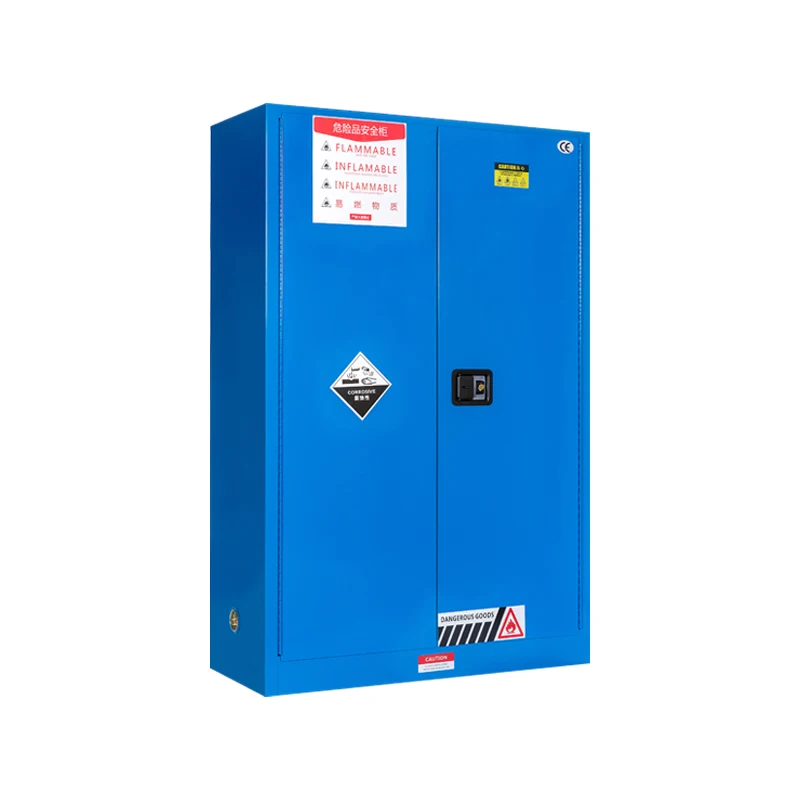
Key takeaways
- Vent fittings do not mean the cabinet must be vented.
- OSHA cabinet construction rules do not provide a universal cabinet-ventilation instruction.
- Any exhaust connection requires model, code and engineering review.
The short answer
There is no safe universal answer. Many flammable-liquid cabinets are used with their vent openings sealed as supplied. A facility may consider mechanical exhaust when a specific hazard assessment or applicable requirement calls for it, but the connection must preserve the cabinet’s intended performance and discharge to an approved location.
Before modifying anything, review the exact model and the project’s spill containment and ventilation questions.
What OSHA 1910.106 does—and does not—settle
OSHA 1910.106(d)(3) addresses maximum cabinet capacity, construction performance, labeling and deemed-compliant metal and wood construction. It does not provide a blanket instruction that every storage cabinet must be mechanically vented.
Other rules may govern the room, process, exposure control or local fire protection. That is why the cabinet question cannot be answered from one isolated sentence or marketplace feature list.
- 01Vent fittings do not mean the cabinet must be vented.
- 02OSHA cabinet construction rules do not provide a universal cabinet-ventilation instruction.
- 03Any exhaust connection requires model, code and engineering review.
Three project routes to distinguish
| Route | What must be confirmed | Main risk |
|---|---|---|
| Openings sealed | Manufacturer-supplied caps and model instructions | Missing or altered closures |
| Passive openings | Whether the configuration is permitted for the model and project | Assuming fittings equal approval |
| Mechanical exhaust | Listing, duct material, airflow, make-up air, discharge and AHJ acceptance | Changing fire behavior or creating an ignition/exposure issue |
Questions before an exhaust connection is designed
Use a request for cabinet drawings and connection details to obtain model interfaces before mechanical design begins.
- Does the exact cabinet documentation permit the connection?
- Which code edition and local amendments apply?
- What contaminant or exposure problem is the system intended to control?
- Is the duct material compatible with expected vapors?
- Where will the exhaust discharge, and how will make-up air be handled?
- How will airflow be verified and maintained?
- Will the change affect any listing, warranty or approval evidence?
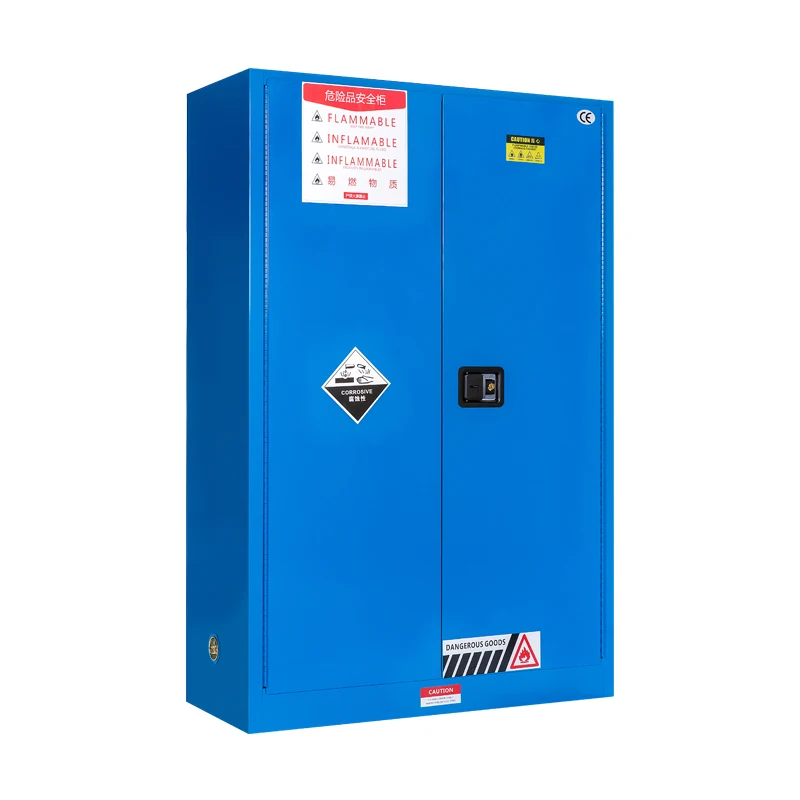
Keep ventilation out of the generic feature checklist
A buyer reviewing flammable liquid storage cabinets should not filter solely on the presence of vent ports. First define the hazard-control objective; then request the port position, size, closure, cabinet construction and relevant model documents.
Do not accept ‘explosion-proof,’ ‘fireproof’ or ‘OSHA approved’ as shorthand for an engineered ventilation solution. Each claim has a different evidence requirement, and OSHA does not approve individual products in the way that phrase implies.
Document the decision
Record the cabinet model, stored inventory, reason ventilation was considered, governing requirement, EHS reviewer, AHJ response, mechanical design reference and commissioning result. If the cabinet remains unvented, record that decision and confirm that supplied openings are closed as required by the model and project.
The related article on what belongs in a flammable storage cabinet should be completed first because ventilation cannot correct an unsuitable inventory.
Model information to request
| Item | Requested evidence |
|---|---|
| Vent openings | Location, diameter, closures and drawing |
| Construction | Exact model specification |
| Documents | Available listing/test/approval records |
| Restrictions | Manufacturer instructions for vented and unvented use |
| Project | Destination, code basis and AHJ requirements |
Define the control objective before discussing airflow
A request to ‘vent the cabinet’ may be trying to solve odor, routine exposure, a spill scenario, room air-quality complaints or a perceived fire-code requirement. These are different problems. Identify the contaminant and release scenario, then determine whether source control at the cabinet is appropriate or whether the process, container or room requires another control. Ventilation should not be used to normalize leaking or poorly closed containers.
If mechanical exhaust is proposed, the project record should cover cabinet instructions, duct compatibility, fan location, ignition control, make-up air, discharge location, airflow verification, alarms and maintenance. The designer must also determine how the connection affects cabinet performance and applicable evidence. A hole and flexible hose are not a design. Commissioning should confirm actual airflow and document the accepted configuration.
- Do not use odor alone as a hazard measurement.
- Do not connect cabinets to a recirculating return without an approved design basis.
- Keep unused openings closed as required by model instructions.
- Reassess the system after cabinet, duct or inventory changes.
Commission and maintain any approved ventilation connection
Commissioning should verify the installed cabinet and duct against the approved drawing, measure airflow using the project method, confirm discharge and make-up air, and test any monitoring or alarm function. Record instrument, date, conditions and acceptance criteria. A fan operating sound is not evidence that the intended airflow exists.
Define what happens after power failure, fan failure or alarm. The facility procedure should state whether cabinet access stops, who responds, and how the system is returned to service. Inspect flexible connections, caps, duct supports and corrosion as applicable; maintain the fan and monitoring devices under their own schedules.
Recommission after changes that can affect performance: cabinet replacement, duct alteration, fan adjustment, room-pressure change or a materially different inventory. Keep the cabinet model, ventilation design, AHJ/EHS decision and test records together so later teams do not mistake an inherited connection for an automatically approved design.
References
- 29 CFR 1910.106 — Flammable LiquidsU.S. Occupational Safety and Health Administration
Sources support the cited regulatory and safety context. They do not certify a Safatrix product or replace model documentation and project review.