Key takeaways
- Corrosive is a hazard class, not a compatibility group.
- Check each SDS and authoritative reactivity information.
- A shelf or tray does not automatically make incompatible storage acceptable.
The short answer
Do not assume acids and bases can share a cabinet. Neutralization can release heat, splatter corrosive material and damage containers or cabinet components. Some acids also have oxidizing or other reactive properties that require separation beyond a simple acid-versus-base split.
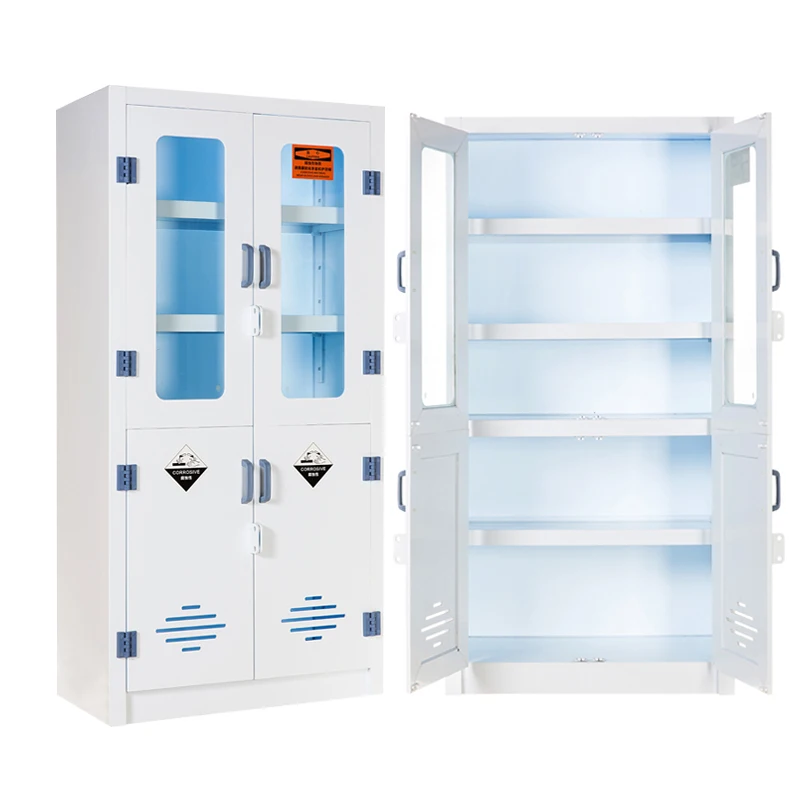
Start with a chemical-by-chemical review, then select among acid and alkali storage cabinets only after the compatibility groups and required separation have been defined.
Build the decision from chemical evidence
Use the current SDS—especially Sections 2, 7 and 10—together with authoritative incompatibility references such as the NIOSH Pocket Guide. Record concentration, physical form and container material because these details can change the practical storage risk.
EPA guidance on incompatible chemical storage warns that mixing incompatible chemicals can generate toxic gas, accelerated corrosion or an exothermic reaction. Its water-treatment examples are not a universal laboratory compatibility chart, but they demonstrate why hazard labels alone are insufficient.
- 01Corrosive is a hazard class, not a compatibility group.
- 02Check each SDS and authoritative reactivity information.
- 03A shelf or tray does not automatically make incompatible storage acceptable.
Five-step compatibility workflow
The chemical segregation checklist provides the working fields, while the option to send a chemical list for review keeps the supplier request tied to actual containers.
- Create a complete inventory using exact product and chemical names.
- Record concentration, container material, size and maximum quantity.
- Extract incompatibilities and storage conditions from each current SDS.
- Assign compatibility groups and identify chemicals requiring dedicated isolation.
- Have the facility EHS process approve cabinets, compartments and secondary containment.
Why secondary containment is not the whole answer
A tray can limit the spread of a small leak when its material, capacity and placement are appropriate. It does not prevent vapor interaction, guarantee resistance to every chemical, or turn one cabinet into two independently approved storage locations.
Review tray material, seams, capacity, shelf loading and the path a leak would take. If the risk assessment requires separate cabinets or fire-separated storage, an internal tray is not an alternative.
Cabinet material follows the compatibility review
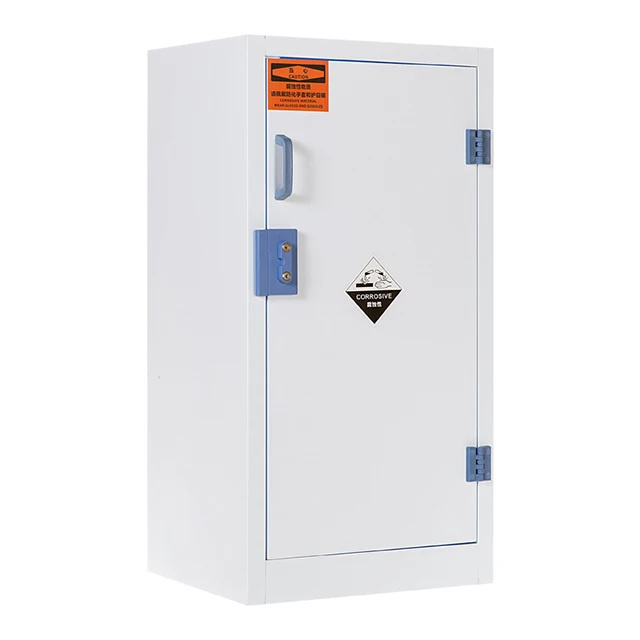
After grouping the inventory, compare exposed cabinet components using the polypropylene versus steel chemical cabinet guide. The body, shelves, trays, hinges, fasteners and locks may not share the same material.
Do not translate a generic ‘corrosion resistant’ description into compatibility with a named acid or alkali. Ask for a model construction statement and keep final suitability with the buyer’s EHS review.
Cabinet assignment record
| Field | What to record | Reviewer |
|---|---|---|
| Chemical | Name, CAS/product, concentration | Inventory owner |
| Hazards | SDS classification and incompatibilities | EHS |
| Container | Material, size, closure and condition | Lab manager |
| Separation | Group, distance, cabinet or compartment | EHS/AHJ |
| Cabinet | Model, materials, tray and load | Buyer/supplier |
| Approval | Basis, date and responsible person | Facility |
Errors to remove from the purchasing brief
Do not request one ‘acid/base cabinet’ without identifying the inventory. Do not assume that color coding proves compatibility. Do not use a copied internet chart as the only chemical decision. Do not place organic acids, oxidizing acids and mineral acids into one group without reviewing their individual reactivity.
Do not reduce segregation to two labels
An acid inventory may contain hydrochloric acid, nitric acid, acetic acid and sulfuric acid. Treating them as one interchangeable group ignores oxidizing behavior, organic reactivity, concentration and container compatibility. Bases can also differ substantially. The review must therefore start at the individual chemical level and build storage groups from documented incompatibilities rather than from cabinet colors.
Secondary containment should be designed for the assigned group and credible leak, using a material compatible with the contents. Separate trays can improve spill control, but proximity, vapor interaction and the facility’s required separation still matter. Where the approved strategy calls for independent cabinets, do not use shelf distance or a divider as a substitute. Label the resulting locations so receiving staff can place new containers correctly.
- Review new chemicals before they enter the cabinet.
- Keep oxidizing acids out of a generic acid group unless specifically approved.
- Check container caps and packaging as part of compatibility.
- Document exceptions and their approving authority.
Maintain segregation when the inventory changes
Compatibility work is not finished when labels are placed on shelves. Establish a review step for every new chemical, concentration or package. The reviewer should compare the current SDS with the approved groups and determine whether existing secondary containment and cabinet materials remain suitable. If the answer is unclear, hold the product in an approved interim location rather than improvising space.
Audit actual placement against the inventory map. Look for containers returned to the wrong shelf, decanted bottles with incomplete labels, residues in trays and packages that hide smaller containers. Correct the process that caused the error, not only the shelf arrangement.
Procurement should preserve separation requirements when replacing a cabinet. A larger cabinet is not automatically equivalent if it combines groups previously stored separately. Put the approved groups, tray materials, shelf loads and required documents into the replacement specification and verify them at receiving.
References
- NIOSH Pocket Guide to Chemical HazardsCDC / NIOSH
- Incompatible Chemicals Storage GuideU.S. Environmental Protection Agency
- 29 CFR 1910.1200 — Hazard CommunicationU.S. Occupational Safety and Health Administration
Sources support the cited regulatory and safety context. They do not certify a Safatrix product or replace model documentation and project review.